
Says market regulator's order is misconceived and not in public interest.

Amid demands for snapping trade ties with China for its transgressions on the border, former Niti Aayog vice chairman Arvind Panagariya has opined that cutting trade with Beijing at this juncture would amount to sacrificing India's potential economic growth. Instead, Panagariya suggested that India should try to enter into free trade agreements (FTA) with countries such as the UK and the European Union to expand its trade. "Engaging China in a trade war at this juncture will mean sacrificing a considerable part of our potential growth... purely on economic grounds, it will be unwise to take any action in response to it (transgressions on the border)," the eminent economist told PTI.

Former Niti Aayog Vice Chairman Arvind Panagariya has opined that cutting trade with Beijing at this juncture would amount to sacrificing India's potential economic growth.

RBI is likely to continue with its tough stance on monetary policy to maintain price and financial stability.

In 2009, the UPA government, had announced a slew of measures to boost liquidity in NBFCs. These included a scheme for providing liquidity support to NBFCs having assets size of over Rs 100 crore through a SPV.

Only a small percentage of passengers who traveled on the trains involved in the June 2, 2023 accident in Odisha had availed of travel accident insurance while booking their tickets online on the IRCTC portal.

Move to shift powers from RBI without discussions baffles many
Higher for longer' may be the narrative in the developed markets, but interest rates might not stay high for very long in India, with a section of the market expecting rate cuts to begin this year. The six-member Monetary Policy Committee of Reserve Bank of India (RBI) decided to keep interest rates unchanged at 6.5 per cent in the April review - after hiking the policy repo rate in six previous meetings. RBI Governor Shaktikanta Das emphasised that the pause was only for the April policy and that the central bank was ready to act if the situation demanded.

PSBs' gross NPA ratio may decline to 12 per cent by March 2019 in the baseline scenario, whereas private banks' gross NPA ratio may decline from 3.7 per cent to 3.2 per cent in March 2019.

Delivering a public speech hours after the RBI launched a rescue act for Yes Bank on March 6, Governor Shaktikanta Das reiterated the RBI's affirmation to do whatever was needed to combat the coronavirus impact. On that day, India had only one confirmed COVID-19 infection, the World Health Organisation was five days off from declaring it as a pandemic and the financially debilitating lockdowns were not even on the horizon. Das' promise on efforts to mitigate COVID-19 impact appeared as a footnote in news reports from the event.

The International Monetary Fund (IMF) on Tuesday slashed India's growth forecast for 2022-23 (FY23) by 80 basis points to 7.4 per cent, citing less favourable external conditions and rapid policy tightening by the central bank. In its update to the April World Economic Outlook, the IMF said that though a global recession in 2022 was ruled out with a growth estimate of 3.2 per cent, the balance of risks was squarely to the downside, driven by a wide range of factors that could adversely affect the global economic performance. "The risk of recession is particularly prominent in 2023, when in several economies growth is expected to bottom out, household savings accumulated during the pandemic will have declined, and even small shocks could cause economies to stall.
.jpg)
Stating that there are strong inter-linkages between banks, NBFCs and other deposit-taking entities, he said for monetary policy to be effective and financial markets to remain stable, they should be regulated by the central bank.

Stock markets are likely to remain range-bound in this holiday-shortened week amid a lack of any major domestic triggers, analysts said. Stock indices may also face volatility during the week amid the monthly derivatives expiry on Thursday. Equity markets would remain closed on Monday for Christmas.

India's current account deficit is expected to deteriorate in the current fiscal on account of costlier imports and tepid merchandise exports, according to the Finance Ministry's monthly economic review. The review released on Thursday by the ministry also said that global headwinds would continue to pose a downside risk to growth as crude oil and edibles, which have driven inflation in India, remain major imported components in the consumption basket. For the present, it said, "their global prices have softened, as fears of recession have dampened prices somewhat. This would weaken inflationary pressures in India and rein in inflation."

The GST intelligence unit detected tax evasion of more than Rs 1.98 lakh crore last year and arrested 140 masterminds who were involved in defrauding the exchequer, the finance ministry said on Thursday. In 2023, the Directorate General of GST Intelligence (DGGI) detected significant GST evasion in diverse sectors like online gaming, casinos, insurance and secondment (import of manpower services). "DGGI has achieved an increase in detection of cases of evasion and voluntary payments. In 2023, DGGI detected 6,323 cases involving evasion of duty of Rs 1,98,324 crore with a voluntary payment of Rs 28,362 crore.

Foreign Portfolio Investors (FPIs) continued their buying spree and poured close to Rs 4,800 crore in the Indian equity markets in the first week of January driven by confidence in the country's robust economic fundamentals. Additionally, they injected Rs 4,000 crore in the debt market during the period under review, data with the depositories showed. With expectations of a prolonged decline in US interest rates in 2024, there is an anticipation that FPIs will likely escalate their purchase, particularly in the initial months of the New Year leading up to the general elections, V K Vijayakumar, chief investment strategist at Geojit Financial Services, said.

Briefing reporters, Nadda said his party has proposed that if holding the three-tier polls together was not possible immediately, then Lok Sabha and assembly elections can be held together first.

Moody's Investors Service on Friday affirmed India's rating at the lowest investment grade of 'Baa3', with a stable outlook, saying high growth will support a gradual increase in income levels, but flagged risks of populist policies due to rise in political tensions. Moody's said although India's potential growth has come down in the past 7-10 years, the growth would outpace all other G20 economies through at least the next two years, driven by domestic demand. Moody's said the restoration of robust growth prospects post-pandemic, the effective commitment to inflation targeting and the rehabilitation of the financial system aided by reform supports its view of strengthening monetary and macro policy effectiveness.

Adani Total Gas Ltd, the joint venture of billionaire Gautam Adani's group and French energy giant TotalEnergies, will invest Rs 18,000 crore to Rs 20,000 crore in the next 8 to 10 years to expand infrastructure for retailing CNG to automobiles and piping gas to households and industries, its CFO said. The company retails CNG to automobiles and pipes gas to household kitchens for cooking purposes in 52 licences that cover 124 districts of the country. It has 460 CNG stations in the country and about 7 lakh consumers of its piped cooking gas.

Currently, there is no regulation or any ban on the use of cryptocurrencies in the country.

The chemicals sector's recovery could be delayed until FY25 if the current trends of weak demand and flat pricing continue. Following a subdued September quarter, the revenue and profit performance of listed chemicals companies are anticipated to fall short of initial expectations of an improvement. Despite some price stability, the demand trajectory remains uncertain.

In view of the economic shock caused by the COVID-19 pandemic, Reserve Bank of India (RBI) on Friday asked scheduled commercial banks and co-operative banks not to make any dividends for the financial year ended March 2020. In view of the ongoing stress and the heightened uncertainty on account of the pandemic, RBI said it is imperative that banks continue to conserve capital to support the economy and absorb losses, if any. The decision is based on review of the September quarter financial performance of banks.

'Some buyers believe prices may correct in the future.' 'This is unlikely. Many developers are increasing prices amid strong sales and inflationary trends.'

The number of dematerialised (demat) accounts required to hold shares and other securities in electronic format rose by 3.1 million in April, bringing the total tally to a fresh record of 154.5 million. Since December last year, the new additions have consistently remained above the 3 trillion mark, a sign that the stock markets continue to attract new investors despite a spike in volatility.

The average housing prices declined by 2-7 per cent year-on-year during July-September in Delhi-NCR, Mumbai, Chennai, Pune, Kolkata, and Ahmedabad on lower demand amid COVID-19 pandemic, according to Knight Frank India. Prices, however, increased in Bengaluru and Hyderabad by 3 per cent and 4 per cent, respectively, during July-September 2020 compared with the year-ago period. Chennai saw the maximum fall of 7 per cent, followed by Delhi-NCR and Pune at 5 per cent. Rates dipped 3 per cent each in Kolkata and Ahmedabad, while Mumbai witnessed 2 per cent price correction.

Financial shares were the top losers.

German Chancellor Angela Merkel and French President Nicolas Sarkozy could not resolve their differences over further boosting the European Financial Stability Facility, recapitalisation of European banks heavily exposed to sovereign debts and a partial write-down of Greek government's debts at a two-hour emergency meeting in Frankfurt on Wednesday night.

Economy improving but long way to full recovery, says FSDC.

rediffGURU and financial planning expert Colonel Sanjeev Govila (retd) answers your personal finance-related questions.

According to sources, Kingfisher Airlines allegedly diverted funds by opening a current account in HDFC Bank and had a balance of Rs 7.5 crore (Rs 75 million) as on date.

Adani group opened a $1.2 billion copper plant, bought a port in Odisha, raised stakes in a cement company and stitched an alliance with rival Mukesh Ambani's Reliance Industries, all in a matter of one week in signs that the apples-to-airport conglomerate has shrugged off the Hindenburg effect and is back to rapid expansion spree. In the last one week, Adani group has through regulatory filings and press statements announced expansions and investments in its mainstay ports business, diversification into metal refining, fund infusion into a two-year-old cement foray and continuing progress in the commissioning of its mega solar project.

PS banks need to pull up their socks to improve cash flows.

The BRICS nations on Friday underlined the need for using local currencies in international trade and financial transactions besides committing themselves to supporting rule-based open and transparent global trade. A joint statement issued at the end of the meeting of the BRICS Ministers of Foreign Affairs and International Relations, also pressed for a robust Global Financial Safety Net with a quota-based and adequately resourced International Monetary Fund (IMF) at its centre. It further said the process of IMF governance reform under the 16th General Review of Quotas, including a new quota formula as a guide, should be completed by December 15, 2023.

Bankers said the outlook of M&As in India in 2024, especially in the second half after the Lok Sabha election, seems relatively better.

Pointing out that global economy continues to vulnerable, the declaration issued at the end of the two-day G-20 summit in Los Cabos said, "this effort (to provide $450 billion to the IMF) shows the G-20 and the international community's commitment to take the steps needed to safeguard global financial stability and enhance the IMF's role in crisis prevention and resolution."

India, along with Southeast Asian countries such as Indonesia, is expected to sustain growth in the medium-term in Asia region, replacing China as the key growth driver, Morgan Stanley and Nomura said in two separate reports released on Monday. While Morgan Stanley projected a 6.2 per cent gross domestic product (GDP) growth forecast for India in FY24, Nomura estimated the Indian economy to grow at 5.9 per cent in 2023. "Even with a slowing China, we expect GDP growth in Asia to sustainably outperform other emerging markets and the US. India and Southeast Asia are set to be the fastest-growing economies this decade.
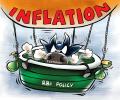
RBI Governor Shaktikanta Das on Friday said that inflation is on a declining trajectory, as it has fallen by 170 basis points from its January 2020 peak. Retail inflation fell to four-month low of 5.91 per cent in March over the previous month, mainly due to easing food prices.
Gordan Brown has advised IMF to set up an early warning system to alert economies of impending financial disasters.

The self-employed should invest in the National Pension System, a government-backed, low-cost retirement avenue where they can choose the mix of debt and equity that is right for them.

The government Rs 20 lakh crore package includes Rs 1.7 lakh crore of fiscal stimulus announced in the first phase, Rs 5.6 lakh crore stimulus provided through various monetary policy measures and Rs 5.94 lakh crore through the second phase, implying Rs 6.70 lakh crore package is still to be announced.
